How to Fill a Moroccan Pouf: Complete Stuffing Guide
If your Moroccan leather pouf just arrived flat and you’re wondering how to fill it — you’re in the right place.
Moroccan poufs are traditionally shipped unstuffed because it dramatically reduces shipping costs and damage risk. The upside: you control how firm or soft it is. This guide covers every filling option, exact quantities, and a step-by-step method that won’t make a mess of your home.
Why Moroccan poufs arrive unstuffed (and that's a good thing)
Shipping a fully stuffed leather pouf internationally would triple or quadruple the cost and dramatically increase damage risk. A flat pouf ships in a fraction of the space and arrives in perfect condition.
The other advantage is customization. A firm pouf works as an ottoman or footstool. A softer fill works as a floor seat.
Arriving unstuffed means you can tune the final result to exactly how you intend to use it. Most customers end up preferring this once they understand it
Best materials to fill a Moroccan pouf: pros and cons
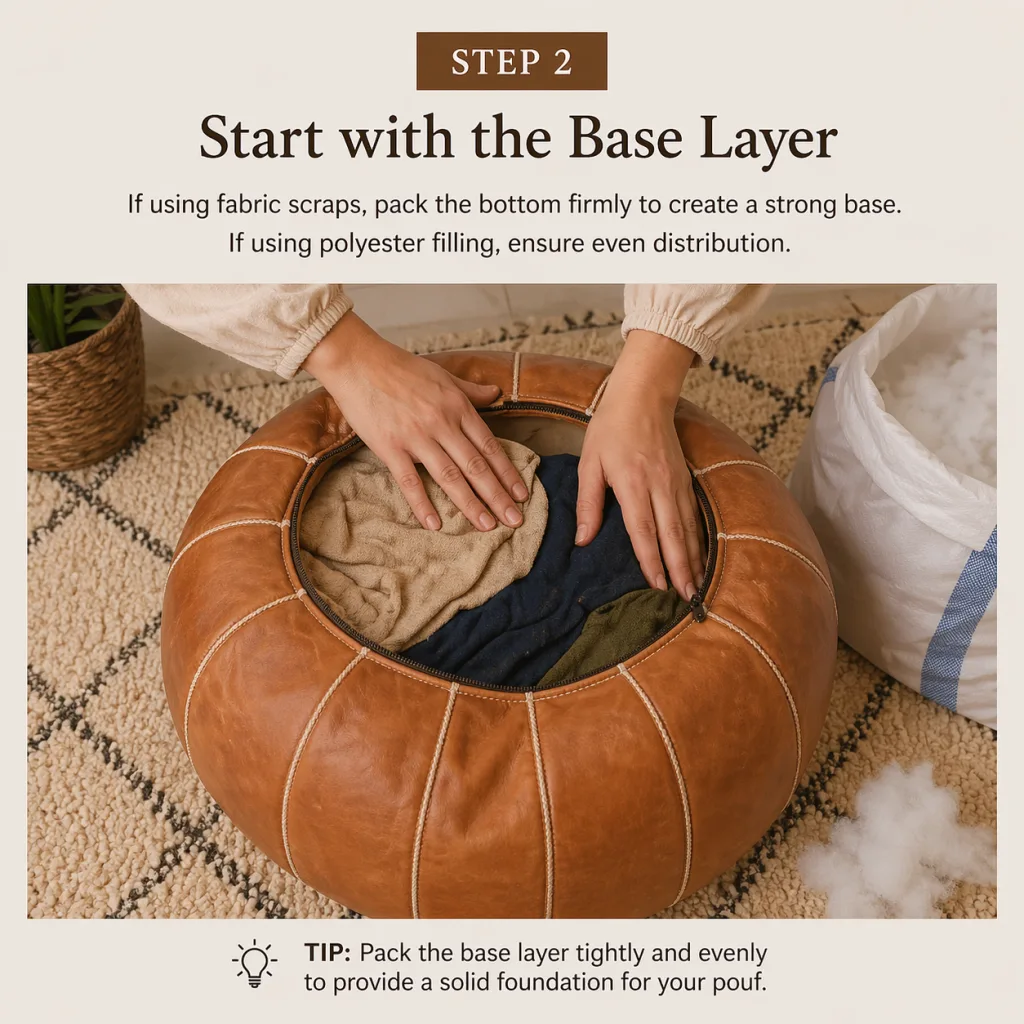
Old clothes and fabric scraps:
Pros: Free, sustainable, gives excellent firmness. Ideal for use as an ottoman.
Cons: Heavy; if you move often, consider weight.
Best for: Those who want a very firm, stable pouf.
Polyester fiberfill (toy stuffing):
Pros: Lightweight, cheap, readily available, gives a soft result.
Cons: Compresses over time; you may need to add more after 6 months.
Best for: Floor seating or decorative use.
Shredded foam:
Pros: Great balance of firmness and resilience. Retains shape well.
Cons: Slightly more expensive; can be messy to work with.
Best for: Premium Ottoman use where you want the feel of a quality piece.
Buckwheat hulls:
Pros: Natural, molds to shape, stays cool.
Cons: Heavy; adds weight.
Best for: Eco-conscious buyers who use it as a meditation or floor seat.
Wool batting:
Pros: Natural, traditional, breathable.
Cons: Most expensive option.
Best for: Those who want a fully natural, artisanal approach.
How much stuffing does a 16x16 leather pouf need?
For a standard 16 x 16 x 12 inch square pouf (the most common size):
• Old clothes/fabric: 10–15 lbs is ideal for firm; 6–8 lbs for medium
• Polyester fiberfill: 5–7 lbs fills the pouf adequately
• Shredded foam: 3–4 lbs gives good firmness
For a round pouf (40cm diameter x 25cm height):
• Polyester fiberfill: 3–4 lbs
• Fabric scraps: 6–8 lbs
Tip: Always slightly overfill, then remove material until you reach your preferred firmness. It’s easier to remove than to stuff more in once sealed.
Step-by-step: how to fill your pouf without making a mess
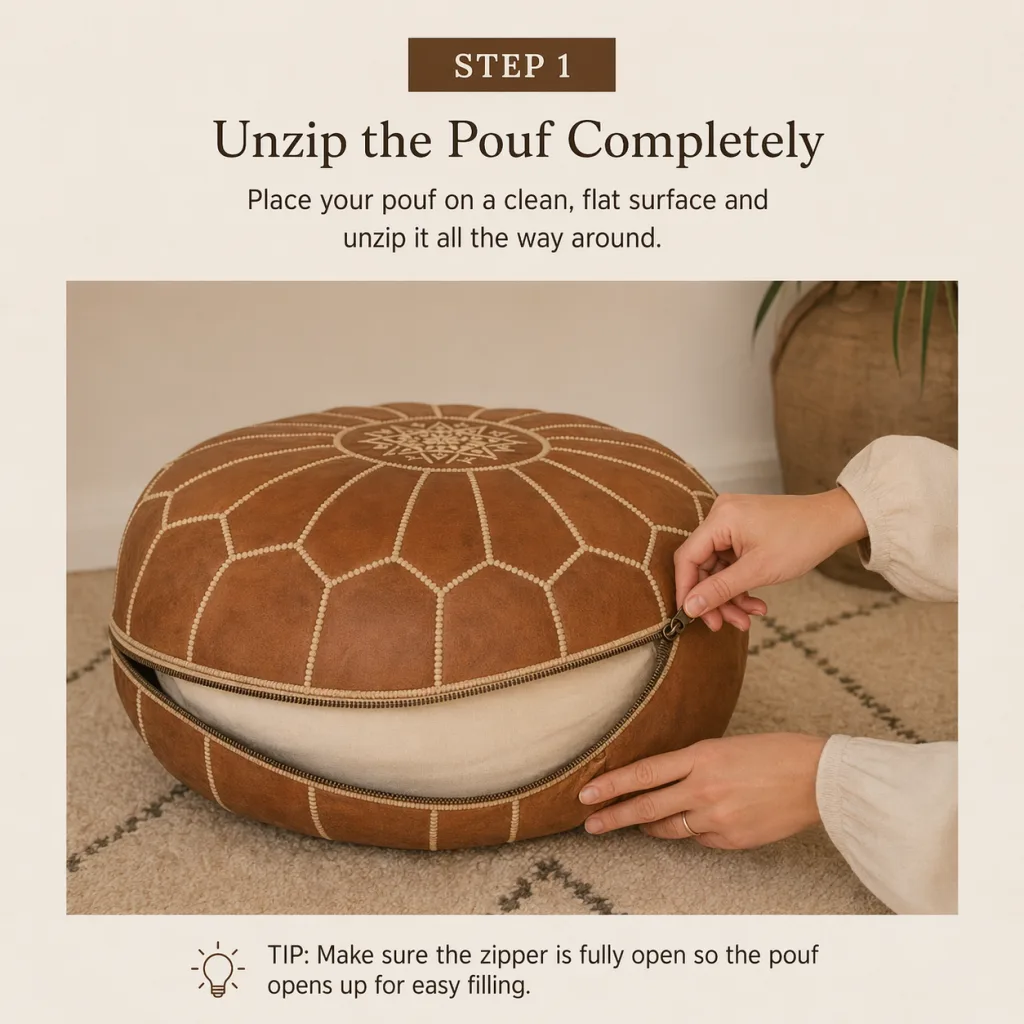
Step 1: Find the zipper or sewn opening. Most leather poufs have a zipper on the bottom or a stitched flap on one side.
Step 2: Place the pouf inside a large laundry bag or tie a plastic bag around the opening to contain your filler as you work. This is the key step most people skip — it prevents fiberfill from escaping everywhere.
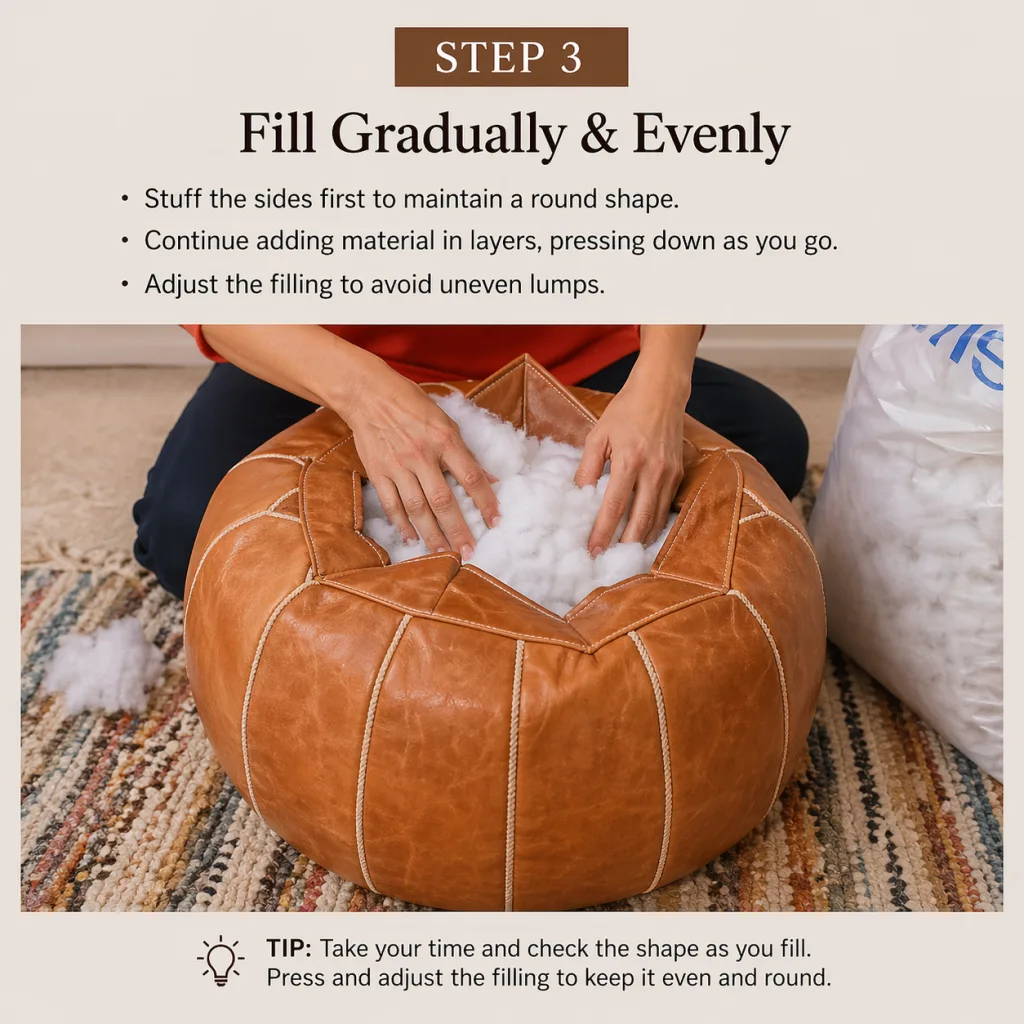
Step 3: Begin adding your chosen filler in layers, pressing each layer down before adding more. Work slowly.
Step 4: Check firmness every few layers by pressing the top of the pouf and sitting on it. Stop when you reach your desired firmness.
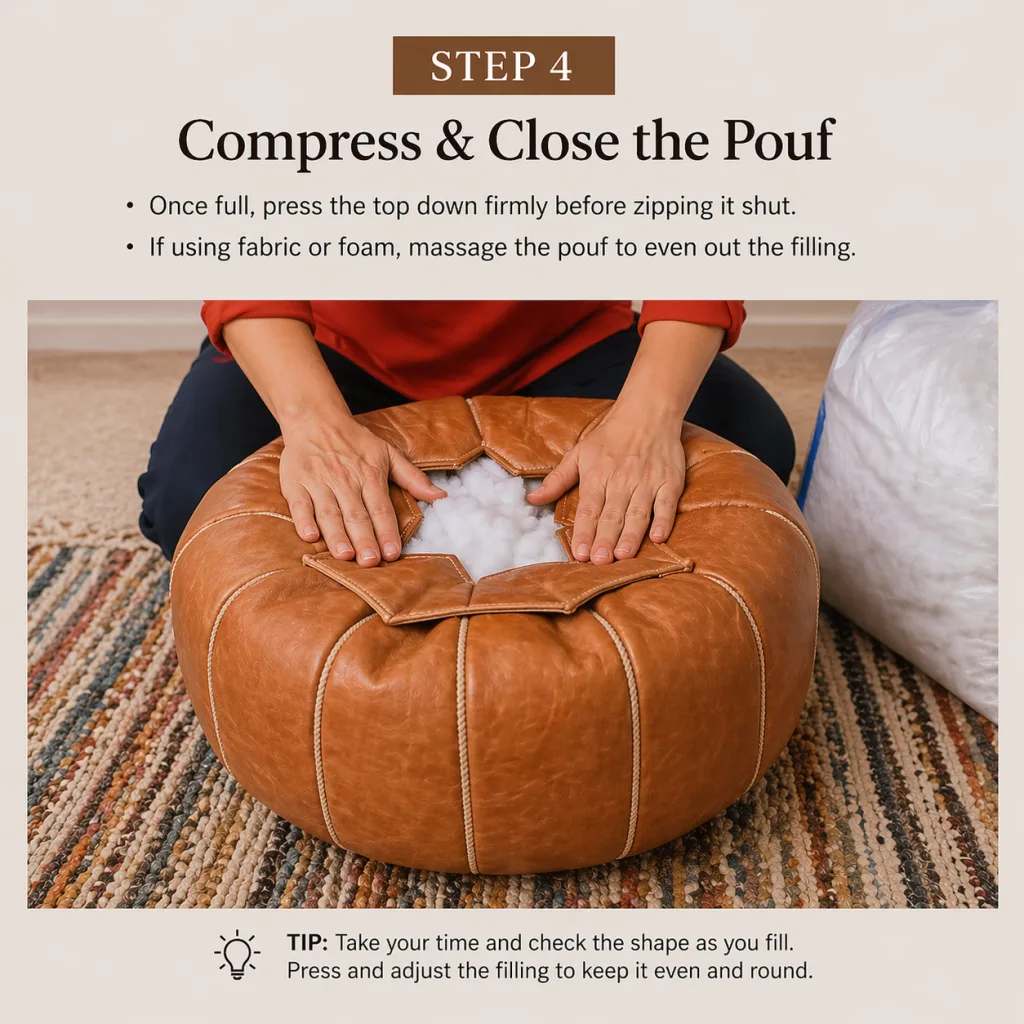
Step 5: Close the zipper or re-stitch the opening. If re-stitching, use a leather needle and waxed thread.
Step 6: Stand the pouf upright and press all sides to distribute the filling evenly. It may look slightly uneven at first — this normalizes within a few days of use.
How firm should a Moroccan pouf be? (ottoman vs. footstool use)
For use as an ottoman (feet resting on it while seated): aim for a firm fill. The pouf should not compress more than 1–2 inches when you press it with both hands.
For use as extra seating (sitting on top of it): aim for medium firmness. It should compress 2–4 inches under your weight and feel supportive, not bottoming out.
For decorative use only: fill loosely — the shape matters more than firmness and you want it to look full without being rock-hard. Most customers using old clothes find they hit ‘ottoman firmness’ after approximately 12–15 lbs in a standard 16-inch pouf
Caring for your leather pouf after stuffing
Moroccan leather poufs use vegetable-tanned leather which ages beautifully with proper care:
• Every 3–6 months, apply a thin coat of leather conditioner (beeswax-based is ideal) to prevent drying and cracking.
• Avoid placing in direct sunlight for extended periods — UV fades the dye.
• For spills, blot immediately with a dry cloth. Do not rub. Allow to air dry naturally.
• If the pouf loses shape over time (especially with polyester fill), open and add more stuffing or compact the existing fill.
• The leather’s patina will deepen over years of use — this is the mark of quality vegetable-tanned leather, not a flaw.
Final Words
You don’t have to follow all the steps to fill take care of your leather Pouff, You only need some infos to start with and its easy after that.
🛍️ Explore Morocco Leather Pouffes
Invest in timeless craftsmanship that lasts.