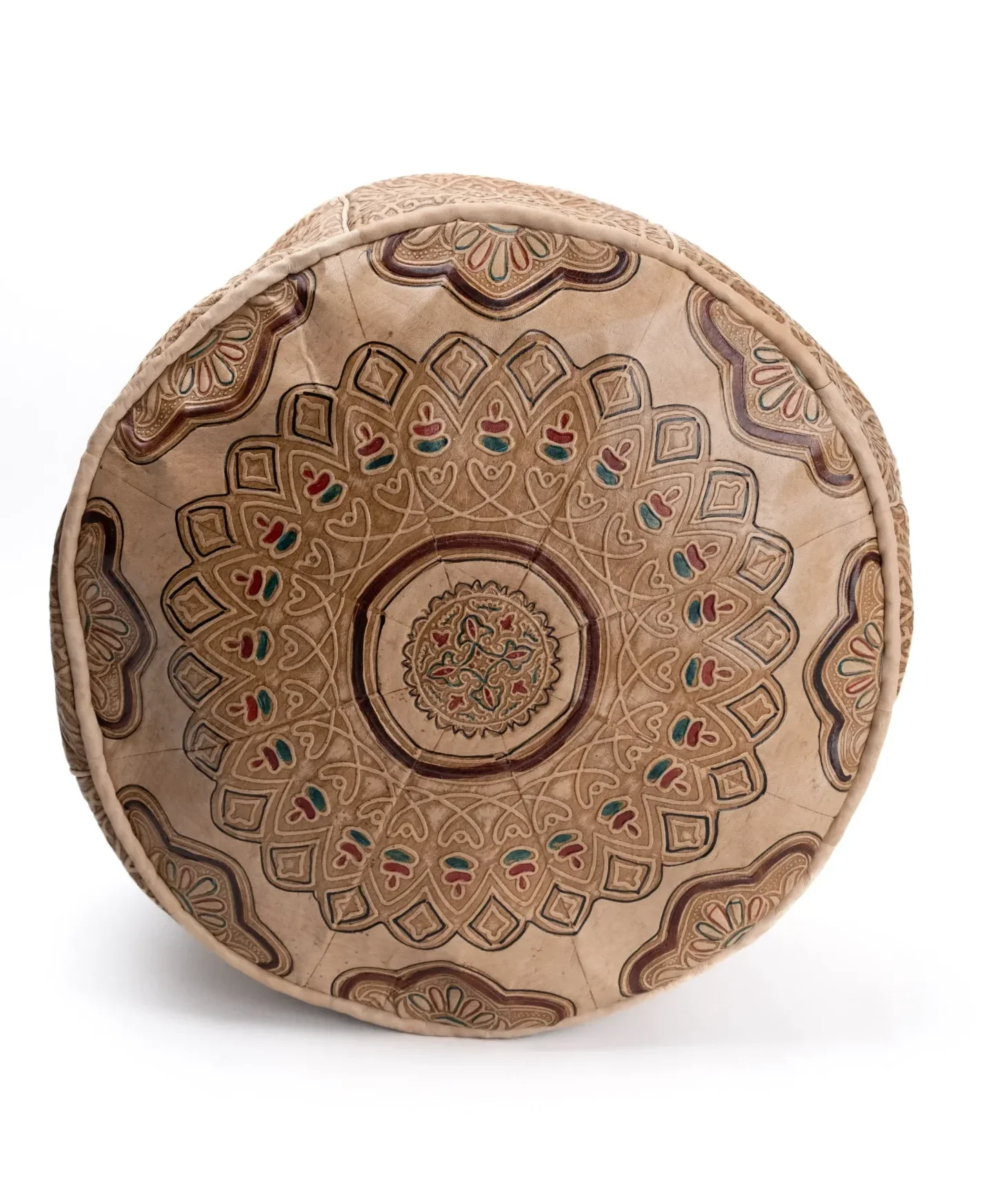
Filling a Moroccan leather pouf correctly ensures comfort, longevity and style. Whether you choose cotton, wool, kapok or foam, layering materials and following the steps above will give your pouf a sturdy base and a plush top. Caring for your pouf, fluffing, adding extra filling and keeping it dry—will keep it looking and feeling great for years to come.
- 68%

Embossed Unique Moroccan Leather Pouf Ottoman
Original price was: £ 95,00.£ 30,00Current price is: £ 30,00. Add to cart - 36%
Handmade Square Moroccan Leather Pouf – Colourful Embroidered Ottoman
Original price was: £ 148,00.£ 95,00Current price is: £ 95,00. Add to cart - 65%
Embossed Moroccan Leather Pouffe
Original price was: £ 95,00.£ 33,00Current price is: £ 33,00. Add to cart - 32%
Handcrafted Square Moroccan Leather Pouf – Natural Wool Ottoman
Original price was: £ 140,00.£ 95,00Current price is: £ 95,00. Add to cart - 32%
Moroccan Floor Pouf – Handmade from Vintage Rug Wool | Unstuffed Ottoman
Original price was: £ 140,00.£ 95,00Current price is: £ 95,00. Add to cart - 65%
Traditional Moroccan Leather Pouffe
Original price was: £ 95,00.£ 33,00Current price is: £ 33,00. Add to cart - 64%
Multicolored Moroccan Leather Pouffe
Original price was: £ 125,00.£ 45,00Current price is: £ 45,00. Add to cart - 32%
Square Leather Pouf Ottoman – Handcrafted Vintage Wool Cushion
Original price was: £ 140,00.£ 95,00Current price is: £ 95,00. Add to cart


- Sale!
Multicolored Moroccan Leather Pouffe
Original price was: £ 125,00.£ 45,00Current price is: £ 45,00. Add to cart - Sale!
Handcrafted Square Moroccan Leather Pouf – Natural Wool Ottoman
Original price was: £ 140,00.£ 95,00Current price is: £ 95,00. Add to cart - Sale!
Square Leather Pouf Ottoman – Handcrafted Vintage Wool Cushion
Original price was: £ 140,00.£ 95,00Current price is: £ 95,00. Add to cart - Sale!
Traditional Moroccan Leather Pouffe
Original price was: £ 95,00.£ 33,00Current price is: £ 33,00. Add to cart - Sale!
Embossed Unique Moroccan Leather Pouf Ottoman
Original price was: £ 95,00.£ 30,00Current price is: £ 30,00. Add to cart - Sale!
Embossed Moroccan Leather Pouffe
Original price was: £ 95,00.£ 33,00Current price is: £ 33,00. Add to cart - Sale!
Moroccan Floor Pouf – Handmade from Vintage Rug Wool | Unstuffed Ottoman
Original price was: £ 140,00.£ 95,00Current price is: £ 95,00. Add to cart - Sale!
Handmade Square Moroccan Leather Pouf – Colourful Embroidered Ottoman
Original price was: £ 148,00.£ 95,00Current price is: £ 95,00. Add to cart
- Sale!
Embossed Moroccan Leather Pouffe
Original price was: £ 95,00.£ 33,00Current price is: £ 33,00. Add to cart - Sale!
Traditional Moroccan Leather Pouffe
Original price was: £ 95,00.£ 33,00Current price is: £ 33,00. Add to cart - Sale!
Moroccan Floor Pouf – Handmade from Vintage Rug Wool | Unstuffed Ottoman
Original price was: £ 140,00.£ 95,00Current price is: £ 95,00. Add to cart - Sale!
Multicolored Moroccan Leather Pouffe
Original price was: £ 125,00.£ 45,00Current price is: £ 45,00. Add to cart - Sale!
Square Leather Pouf Ottoman – Handcrafted Vintage Wool Cushion
Original price was: £ 140,00.£ 95,00Current price is: £ 95,00. Add to cart - Sale!
Handcrafted Square Moroccan Leather Pouf – Natural Wool Ottoman
Original price was: £ 140,00.£ 95,00Current price is: £ 95,00. Add to cart - Sale!
Embossed Unique Moroccan Leather Pouf Ottoman
Original price was: £ 95,00.£ 30,00Current price is: £ 30,00. Add to cart - Sale!
Handmade Square Moroccan Leather Pouf – Colourful Embroidered Ottoman
Original price was: £ 148,00.£ 95,00Current price is: £ 95,00. Add to cart
- Sale!
Embossed Moroccan Leather Pouffe
Original price was: £ 95,00.£ 33,00Current price is: £ 33,00. Add to cart - Sale!
Embossed Unique Moroccan Leather Pouf Ottoman
Original price was: £ 95,00.£ 30,00Current price is: £ 30,00. Add to cart - Sale!
Handmade Square Moroccan Leather Pouf – Colourful Embroidered Ottoman
Original price was: £ 148,00.£ 95,00Current price is: £ 95,00. Add to cart - Sale!
Handcrafted Square Moroccan Leather Pouf – Natural Wool Ottoman
Original price was: £ 140,00.£ 95,00Current price is: £ 95,00. Add to cart - Sale!
Moroccan Floor Pouf – Handmade from Vintage Rug Wool | Unstuffed Ottoman
Original price was: £ 140,00.£ 95,00Current price is: £ 95,00. Add to cart - Sale!
Traditional Moroccan Leather Pouffe
Original price was: £ 95,00.£ 33,00Current price is: £ 33,00. Add to cart - Sale!
Multicolored Moroccan Leather Pouffe
Original price was: £ 125,00.£ 45,00Current price is: £ 45,00. Add to cart - Sale!
Square Leather Pouf Ottoman – Handcrafted Vintage Wool Cushion
Original price was: £ 140,00.£ 95,00Current price is: £ 95,00. Add to cart