Inside the Kiln: How Moroccan Pottery Is Made by Hand
Introduction: The Fire Within the Clay
Moroccan pottery isn’t just tableware or décor—it’s the living result of centuries-old traditions passed from generation to generation. Each piece tells a story formed from earth, shaped by skilled hands, and brought to life by fire. In this behind-the-scenes look, we reveal how handmade Moroccan pottery comes to life, combining ancestral techniques with artistic precision.
1. Harvesting the Clay: From Earth to Artisan
The journey begins in the red and grey clay-rich regions near Fès and Safi, where Moroccan artisans source their raw material. The clay is cleaned of debris and kneaded by hand or foot until it reaches a malleable texture. This process, often done in small family-run workshops, ensures the clay is ready for shaping without industrial shortcuts—staying true to its handmade Moroccan pottery roots.
2. Shaping the Soul: Moulding by Hand or Wheel
Once prepped, the clay is shaped using either a traditional foot-powered wheel or hand-moulding techniques. This is where artistry takes centre stage—forming Moroccan pottery into bowls, tagines, plates, and vases with symmetrical grace. Artisans may use their own fingers or handcrafted wooden tools to refine every curve and edge.
🖐 No two pieces are ever identical—each one carries the personal touch of its maker.
3. Sun-Drying and Smoothing the Surface
Before the first firing, the newly moulded ceramics are left to dry under the Moroccan sun, sometimes for days. This slow-drying phase allows the clay to firm naturally, preventing cracks during firing. Once hardened, each item is carefully smoothed by hand and prepped for the next phase.
4. The First Firing: Strength in the Flame
The dried ceramics are loaded into traditional kilns, where they’re fired at temperatures of up to 1000°C. This first firing transforms the fragile clay into durable bisque. In smaller villages, many potters still use wood-fired kilns, which add an organic unpredictability to the colour and finish—another testament to the authenticity of Moroccan ceramics.
5. Colour & Pattern: Glazing with Moroccan Flair
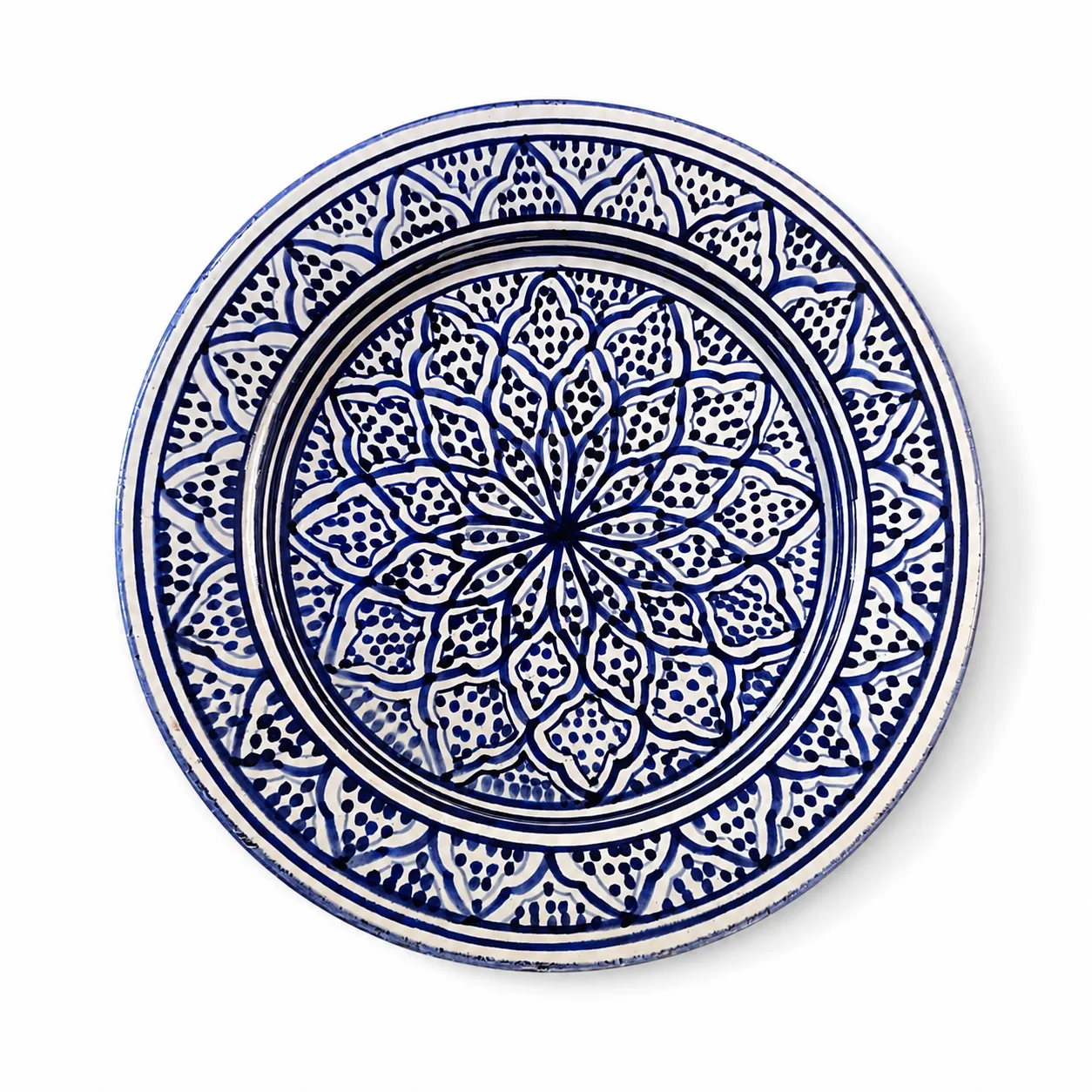
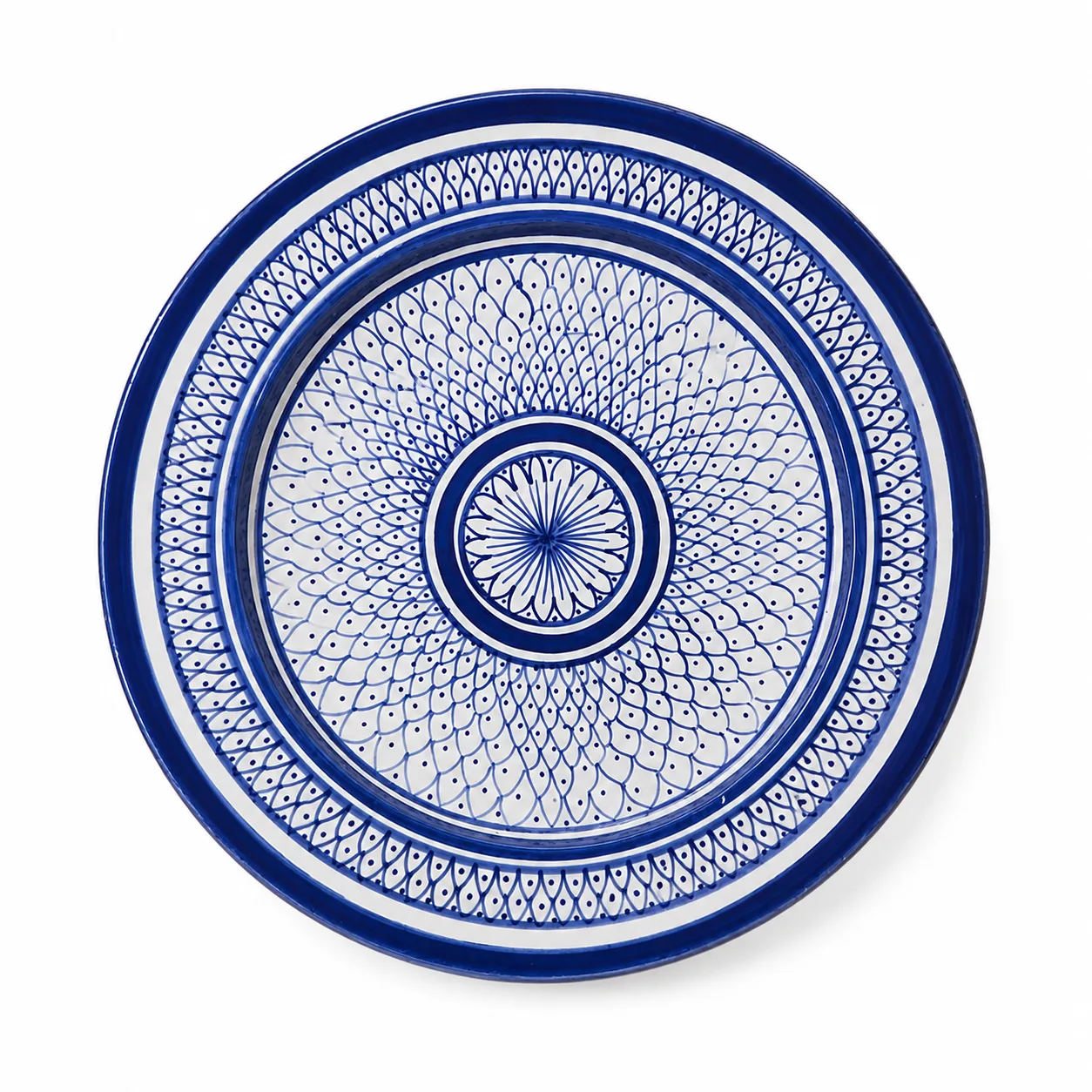
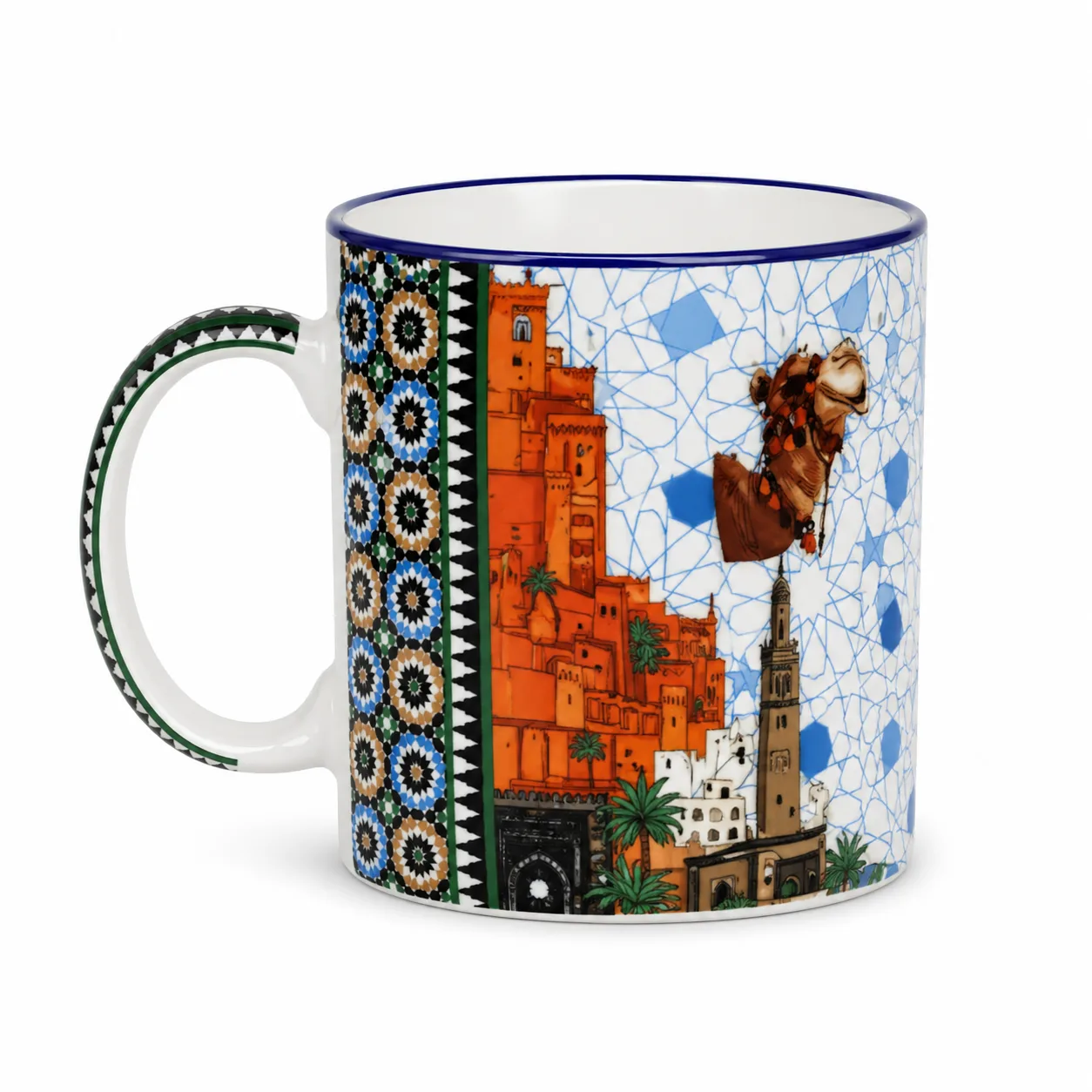
Next comes the glazing, often done using natural pigments and dyes in iconic Moroccan hues: deep blues, emerald greens, ochres, and whites. Whether it’s the geometric zellige style or floral arabesques, patterns are painted freehand—sometimes with a single-hair brush—requiring extreme precision and a steady hand.
🎨 Glazing isn’t just decorative—it’s an art passed down through generations.
6. Final Firing: The Last Touch of Magic
Once glazed, the pieces return to the kiln for their final firing. This seals in the colour, brings out the glaze’s sheen, and hardens the piece for daily use or decoration. The result? Glossy, vivid, and vibrant Moroccan pottery that’s both beautiful and functional.
7. Beyond the Kiln: A Heritage to Hold
What makes handmade Moroccan pottery so remarkable is not only the technique—but the spirit. Each piece is a symbol of resilience, tradition, and artistry. From cooking tagines to decorative ceramics, owning Moroccan pottery means holding a story in your hands—crafted slowly, ethically, and beautifully.
Conclusion: Craft That Transcends Time
In an age of fast production, Moroccan artisans remind us that beauty takes time. The ancient kiln process—from earth to flame—is more than craft; it’s cultural preservation. Whether you’re seeking authentic Moroccan ceramics or simply want a piece of this heritage in your home, handmade Moroccan pottery offers warmth, meaning, and timeless design.