The Symbolism Behind Moroccan Ceramic Patterns
Introduction: A Language in Clay
Moroccan ceramics are more than just beautiful—they’re storytelling in fired earth. With each curve, line, and symbol, generations of artisans have passed down a visual language rooted in culture, geography, and spiritual beliefs. From the colourful zellige tiles of Fez to the earthy bowls of the Atlas, Moroccan pottery patterns are symbols—encoded heritage etched by hand.
The Origins of Moroccan Ceramics
Moroccan ceramics date back centuries, influenced by Berber, Arab, Andalusian, and sub-Saharan traditions. This fusion produced an art form rich in technique and symbolism. Traditionally, pottery was made by hand and fired in wood-burning kilns, then painted with mineral-based glazes in deep cobalt, saffron, and green tones. These pieces were as functional as they were symbolic—serving water, holding couscous, or gracing courtyards.
Amazigh (Berber) Symbols: Sacred Geometry
One of the most striking features of Moroccan pottery patterns is their use of Amazigh (Berber) symbols—a rich set of geometric motifs passed from mothers to daughters for generations. These include:
The diamond: often a symbol of fertility and protection.
The zigzag or snake: representing water, vital for life in dry climates.
The cross or star: a balance of elements, and in some regions, a protective talisman.
These motifs are not merely decorative; they’re a script of identity, resilience, and continuity.
Zellige: Mosaic as Mathematics
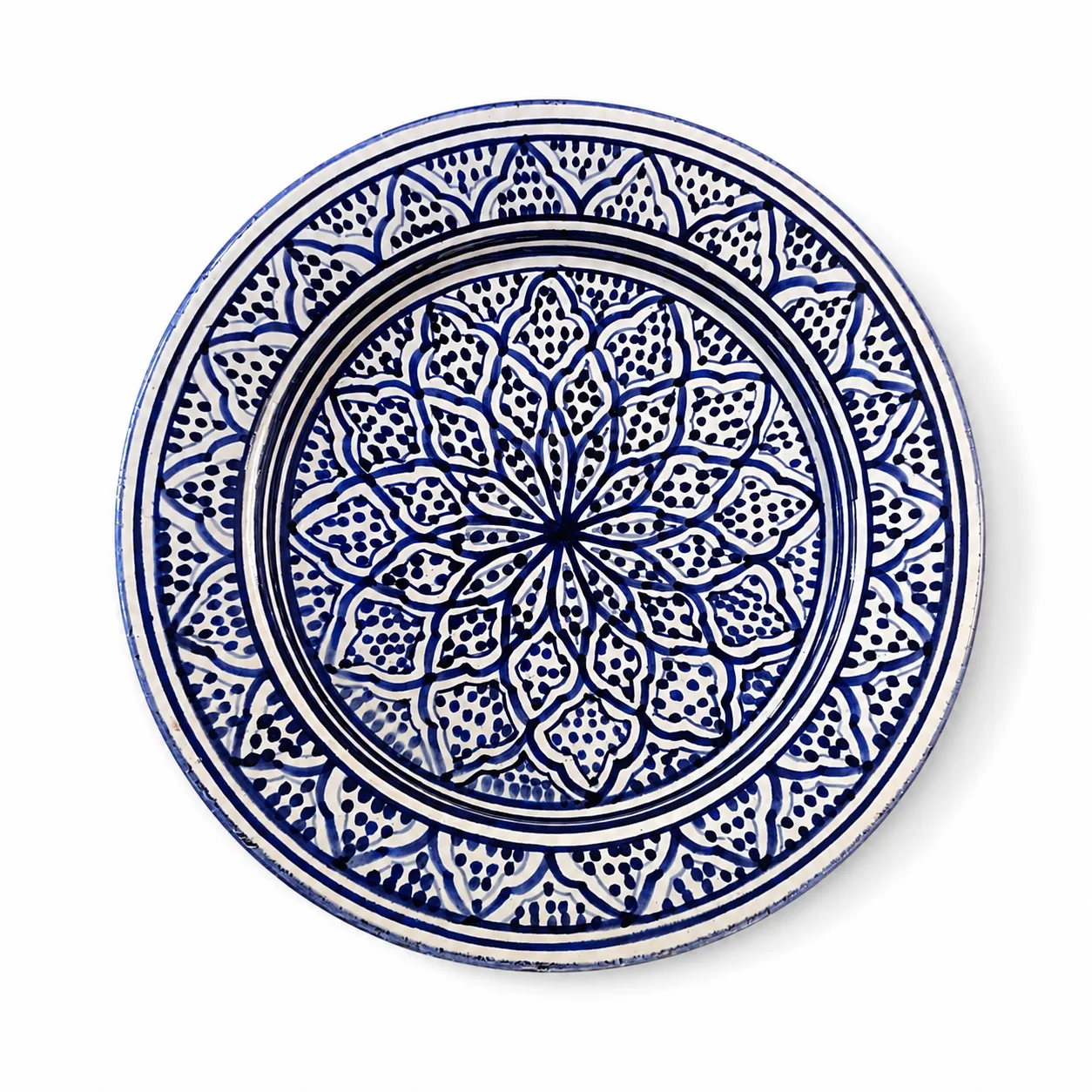
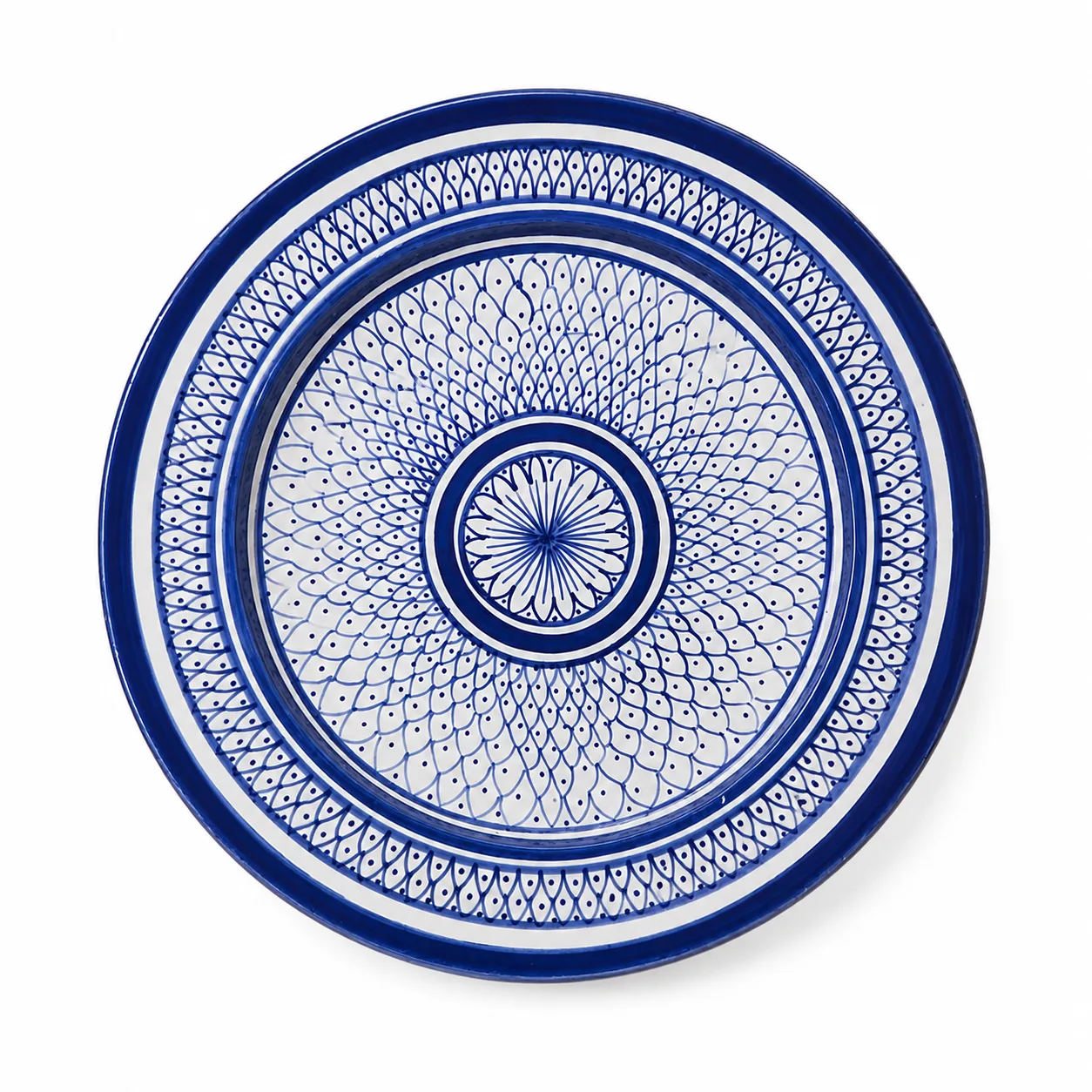
Zellige, the famous Moroccan tilework, is a masterpiece of mathematical design. These small, glazed ceramic tiles are cut and assembled into complex geometric patterns with perfect symmetry. While zellige is more often found in walls and fountains, its design logic influences Moroccan ceramics. The repeat patterns you’ll see on handmade bowls or platters echo zellige grids—symbolising unity, balance, and the infinite.
Regional Styles and Symbolism
Moroccan pottery varies by region, and so do the symbols and colours.
Fez: Known for its intricate blue-on-white floral and geometric motifs, influenced by Andalusian design.
Tamegroute: Famous for its unique green glaze and earthy, irregular textures. The glazes themselves represent nature and fire.
Safi: A coastal town known for its multicoloured painted ceramics that blend Amazigh symbols with floral flourishes and curved designs.
Each region reflects a different relationship with the land, the divine, and the domestic—told through clay.
Why the Symbols Still Matter
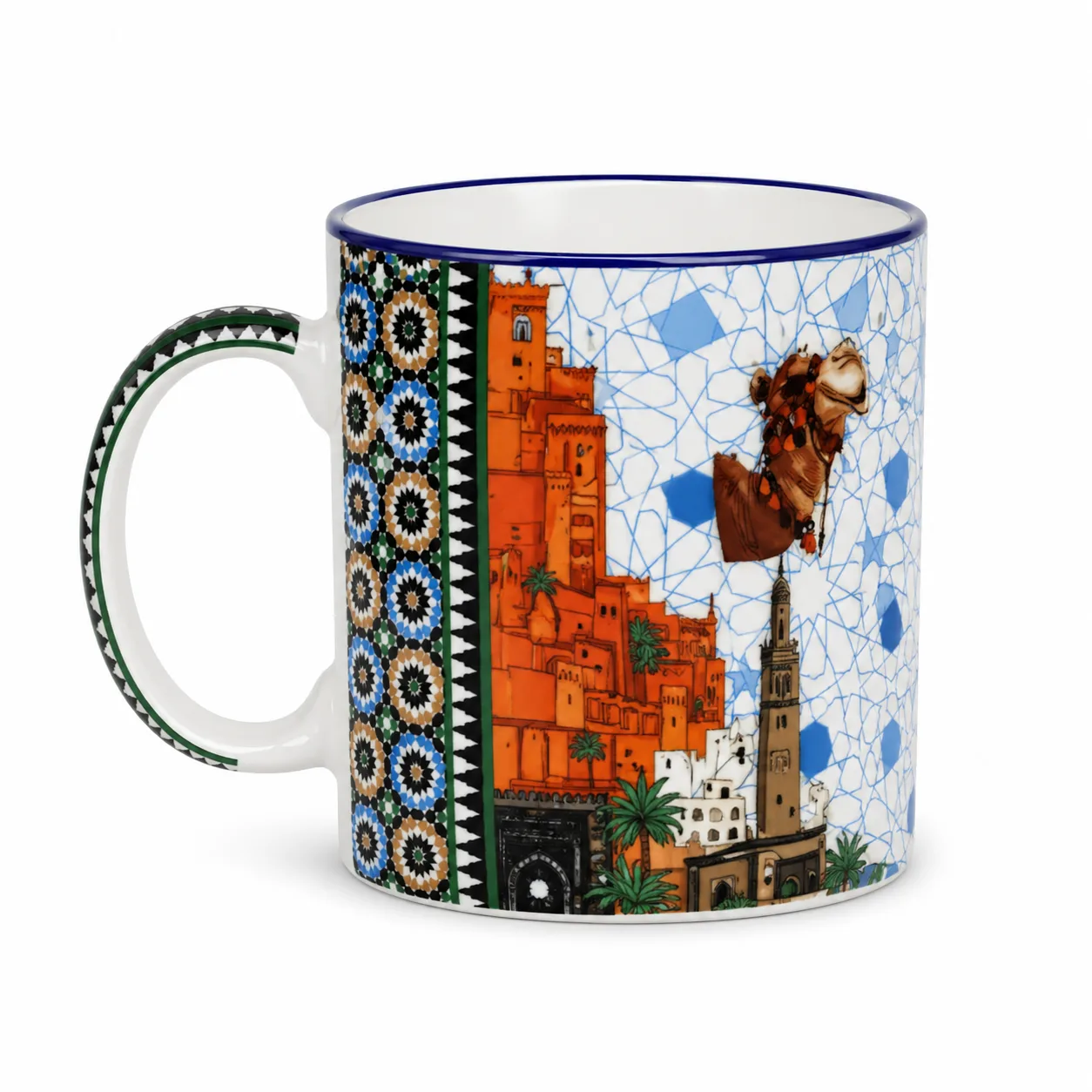
In a world of mass production, handmade Moroccan ceramics remain deeply rooted in cultural meaning. When you hold a hand-painted Moroccan bowl or mug, you’re not just admiring design—you’re holding a story. The Moroccan symbols painted on the surface represent lineage, land, and love. They speak to the artisan’s identity and invite you to be part of that story.
Closing: Bringing Meaning Home
If you’re seeking more than just decoration—if you’re drawn to objects that tell stories—then Moroccan ceramics are a perfect choice. Whether it’s a tagine pot with protective Amazigh symbols or a serving platter echoing ancient zellige, every piece invites you to appreciate heritage, not just aesthetics.